Affiliate disclosure: PicksLab earns commissions on qualifying Amazon purchases via the pickslab-20 tag, at no extra cost to you.
Has your dog ever slipped their leash, jumped a fence or taken an unsupervised tour of the neighborhood? Once they’re out of sight, it’s hard to know which way to start looking. A GPS dog tracker can put their location on your phone and alert you when they leave a safe area, giving you something more useful to go on than calling their name down the street.
There’s a reason to use one even if your dog rarely leaves your side. Are they getting less exercise on the days you’re at work? Sleeping more than they used to? These collars also keep a record of activity and rest, which can help you notice changes that are easy to miss when life gets busy.
We looked at Tractive DOG 6 and Fi Series 3+ for both jobs. The biggest difference beyond finding your dog is what they tell you afterward: Tractive adds resting heart and breathing trends, while Fi counts steps and records behaviors such as eating, drinking and licking. Here’s what that information is useful for, where it falls short and what you’ll pay to keep it working.
Prices and What You Get
| Product | Price checked October 7, 2026 | Linked version | What stands out |
|---|---|---|---|
| Tractive DOG 6 | $47.40 | Black tracker; subscription extra; attaches to an existing collar | Resting heart and breathing trends; active minutes |
| Fi Series 3+ | $129.00 | Pink X-Small collar; membership extra; check size before ordering | Steps, sleep and behavior tracking; integrated collar |
Both checked offers were new and in stock with working purchase controls and free standard US delivery. Tractive was sold by Amazon.com; Fi was sold by Fi Dogs and shipped by Amazon. Fi’s $90.30 promotion required Prime, so the table uses its ordinary price. The Fi link currently redirects to the newer Pink XS listing; the live offer requires membership despite older search results saying it is included. Other sizes, sellers and bundles can differ.
Is This Like a Fitbit for Your Dog?
Partly. Both combine location tracking with a record of movement and rest. But “health tracking” doesn’t mean they measure the same things, and a high activity score doesn’t establish that a dog is healthy.
| What you want to know | Tractive DOG 6 | Fi Series 3+ |
|---|---|---|
| Did my dog get exercise? | Active minutes, goals and estimated calories; not a documented step-count display | Step counts and goals |
| How far was our walk? | Walk route, time and distance use your phone’s GPS | Walk cards show steps, distance and time; phone connection improves the route |
| How did my dog sleep? | Sleep and waking trends | Rest and sleep tracking |
| What is their heart rate? | Resting heart-rate trends, not an exercise heart-rate display | No heart-rate measurement documented in the sources checked |
| What about breathing? | Resting respiratory-rate trends | No respiratory-rate measurement documented in the sources checked |
| What happened while I was away? | Barking, scratching and separation-anxiety monitoring | Barking, licking, scratching, eating and drinking patterns |
| Where are they now? | Tracker-based LIVE location and safe-area alerts | GPS location, safe zones and Lost Mode |
The distinction between active minutes and steps matters if you’re trying to make walks part of a routine. Tractive counts time spent walking, running or playing, rather than small movements while resting. Its calorie figure is an estimate that also uses the dog’s profile. Fi gives you a step count. Those are different measures: you can’t compare their scores as though they came from the same instrument. Sources: Tractive activity metrics and Fi’s model-specific feature chart.
For example, a tracker could help you notice that your dog consistently gets less activity on workdays than weekends. That’s something you can act on by changing the routine. It cannot tell you how much weight your dog should lose or prescribe the right amount of exercise. Discuss weight and exercise goals with your vet rather than treating an app’s target as a medical recommendation.
Heart Rate, Sleep and Scratching: What the Numbers Mean
Tractive’s resting heart-rate feature looks at the dog while resting or sleeping and builds a baseline over at least seven days. Its breathing-rate feature works with resting data too. You get trends to discuss with a vet, not a live exercise ECG. Don’t wait for a tracker warning when your dog seems unwell.
Fi takes a different approach. Its behavior reports organize patterns such as eating, drinking and licking. That could make a change easier to describe: “the licking log increased this week” is more specific than “something seems different.” It still doesn’t explain the cause. Eating detection isn’t a weighed food portion, and drinking detection isn’t a measurement of water consumed.
There are also gaps in the record. Fi says behavior insights require a connection to the phone, known Wi-Fi or a charging base in a Safe Zone; they can arrive late. During walks it records steps, not scratching or licking behaviors. Tractive’s health data needs Bluetooth syncing, so a remote location update doesn’t necessarily mean its health screen is current. These are useful diaries, not an uninterrupted view of everything your dog does.
Can You See Where Your Dog Went in the Woods?
You need to distinguish a recorded walk from the dog’s own location history. Tractive’s Walk feature follows your phone. If your dog runs into the brush while you stay on the path, that walk trace isn’t proof of where the dog went. Tractive’s separate LIVE mode uses the tracker on the dog. This difference is explicit in its Walk versus LIVE documentation.
Fi also recommends carrying your phone with its app running in the background for better walk recording. Its normal GPS-only walk history connects more widely spaced points and can cut across roads or paths on the map. Lost Mode is a separate use case; don’t judge a search feature from an ordinary walk trace alone.
So a location history may help you understand the general area your dog explored, but it can’t reliably establish contact with a particular patch of brush. Neither tracker detects ticks. Scratching data isn’t a tick test either. The CDC recommends checking outdoor pets for ticks daily, not only after a map shows a suspicious route.
Both products depend on cellular service to report remote GPS positions. Fi Series 3+ uses AT&T LTE-M, even if your own phone uses another carrier; check Fi’s coverage guidance. Tractive likewise needs GPS reception and supported cellular coverage. “Unlimited range” doesn’t fix a dead zone. Before relying on either, try it on your usual route with the dog safely leashed and another person checking the app.
1. Tractive DOG 6
Buy Tractive DOG 6 on Amazon ->
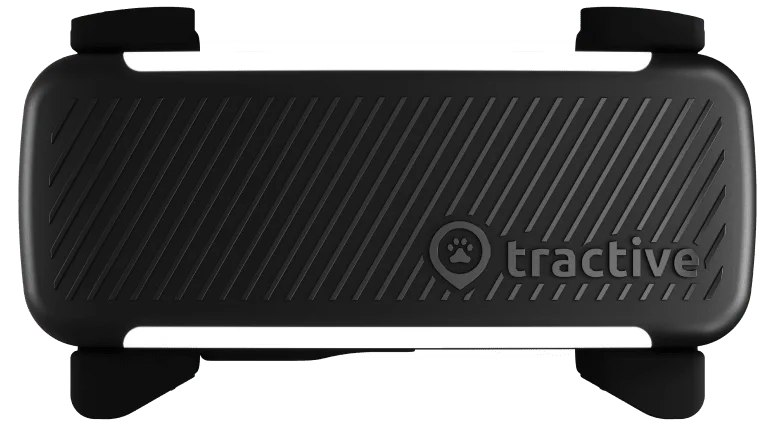
Image: Tractive manufacturer media.
Price checked: $47.40 for the black tracker without subscription, October 7, 2026.
Key specs: Health: resting heart and respiratory-rate trends; Activity: active minutes and estimated calories; Charging: USB-C; Included clip: collars or harnesses up to 3cm wide; Weight: 1.4 oz; Dimensions: 2.8 x 1.1 x 0.7 inches.
The DOG 6 is the stronger documented fit here for an owner who wants resting-vitals trends as well as location tracking. The health feature matrix includes sleep, barking and scratching for this model. The value is seeing changes in one dog’s routine, not making a diagnosis from a score. Activity is reported in active minutes and estimated calories, so don’t buy it expecting Fi’s step-goal interface.
Keeping your existing collar is convenient, but check the physical fit: Tractive’s DOG 6 specifications put it at 1.4 oz and recommend it for dogs over roughly 9 lb. The setup guide and Tractive GPS app instructions explain the included clip. A compatible iOS or Android phone, an active tracker subscription and supported cellular coverage are required for remote tracking.
It isn’t the right purchase if you need a documented step counter or reliable reporting from a cellular dead zone. Tractive advertises up to two weeks with power-saving conditions, not two weeks of continuous LIVE tracking. Charging removes the tracker from service, so build that into your routine rather than treating the maximum as a guarantee.
2. Fi Series 3+
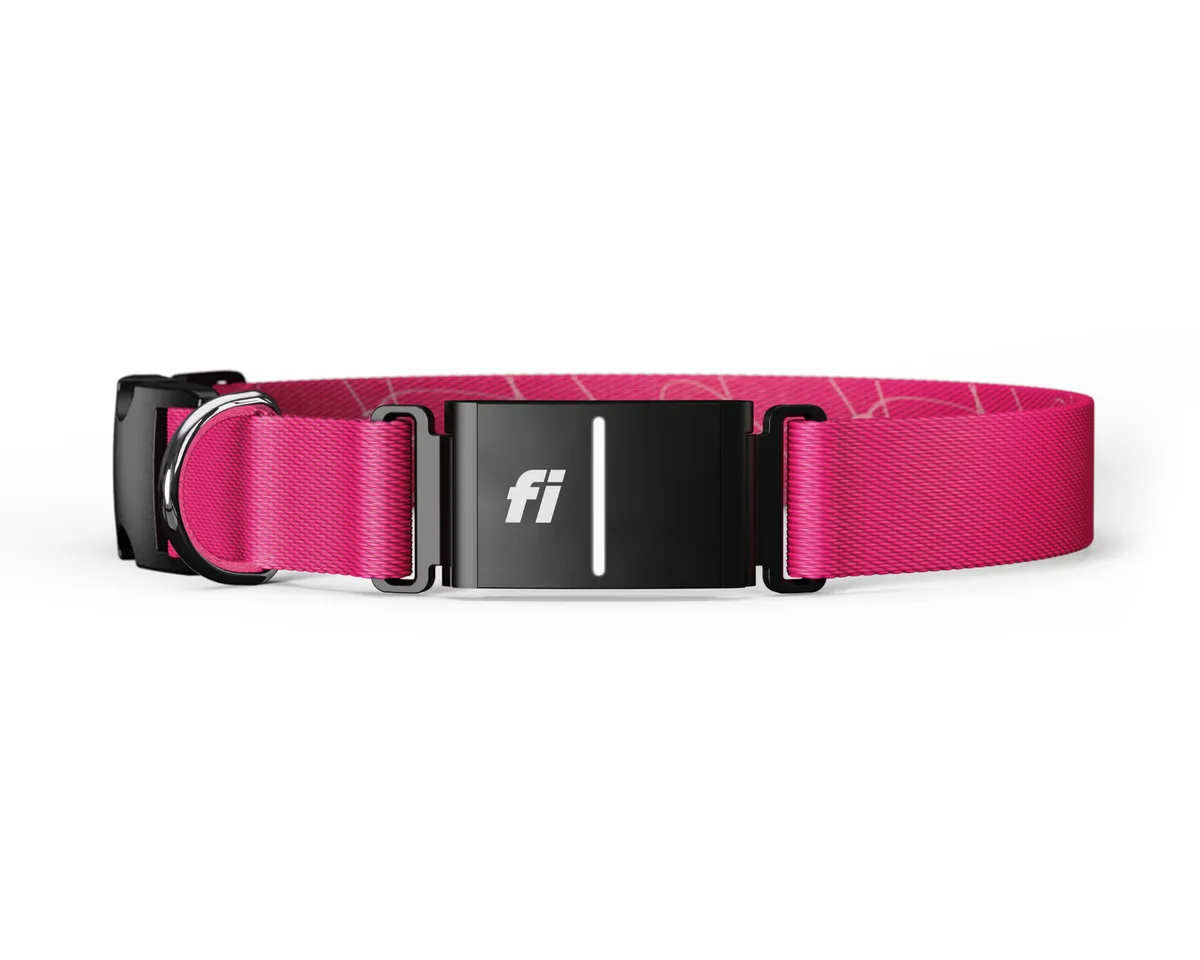
Image: Fi manufacturer media.
Price checked: $129.00 for the new Pink XS collar, membership required, October 7, 2026.
Key specs: Activity: step counts; Behavior: eating, drinking, licking, scratching and barking; Charging: wireless Fi Base; Linked XS collar length: 9.5-11 inches; Linked XS collar width: 0.75 inch; Water-resistance ratings: IP68 and IP66K.
Fi’s appeal is a step-and-behavior diary built into the collar your dog already needs to wear. Series 3+ adds behavior recognition that the older Series 3 doesn’t have. Fi’s upgrade comparison also documents Apple Watch support. For someone trying to keep a consistent walking routine, steps are a more familiar starting point than a new activity score.
The Series 3+ is the more natural fit if step goals and eating, drinking or licking patterns are what you want to follow. But behavior tracking has important limits: reports need a Safe Zone connection, and walks are step-focused rather than a record of every behavior. We found no documented heart-rate or respiratory-rate measurement for Series 3+ in Fi’s checked feature specifications. Don’t substitute its health branding for those measurements.
The linked XS size is 9.5-11 inches long and 0.75 inch wide; it isn’t a universal size recommendation. The collar and wireless base are a different setup from Tractive’s clip-on. Install the official Fi app. A compatible iOS or Android phone and an active Fi membership are required; configure the Fi Base and location permissions, and check current app-store OS requirements.
Don’t pay for Fi primarily to obtain heart-rate data or to use an ordinary collar without Fi-compatible fittings. Fi advertises up to three months of battery life, but its battery guidance explains why connection and tracking activity change that. The two brands’ advertised maximums aren’t a like-for-like battery comparison.
What Will the Subscription Cost?
The hardware price isn’t the first-year total. At the time of this check, the rendered Tractive plan page showed a $144 annual Premium option. Together with the $47.40 device, that example totals $191.40 before tax. Tractive’s indexed plan snippets showed different figures, so confirm the plan offered during activation rather than assuming that quote applies to every account. Basic versus Premium mainly changes sharing, international use and history: Basic retains 24 hours of location history; Premium offers 365 days and export. Core activity and health monitoring aren’t Premium-only features.
Fi’s billing guidance lists $99 for six months, $189 for a year or $339 for two years, with a six-month minimum commitment. The linked $129 hardware plus the listed annual plan totals $318 before tax. These are dated examples for the separately billed offers above, not quotations for a different membership-included bundle. Check renewal terms as well as the introductory charge.
Other Trackers Worth Looking At
Tractive and Fi aren’t the whole market. You might need a smaller tracker, more detailed health monitoring or equipment for use away from cellular service. These alternatives address those needs; each link goes to the manufacturer’s information.
| Alternative | Why it belongs on your list | Important distinction |
|---|---|---|
| FitBark GPS | Combines location with activity, sleep and behavior information | A third ecosystem to compare, not evidence that its health metrics are medically equivalent |
| Fi Mini | Fi’s dog behavior features in a lighter attachable tracker | Different hardware and charging arrangement from the integrated Series 3+ |
| PetPace | Manufacturer emphasizes pulse, respiration, temperature and vet access | Investigate it with your vet for a health-monitoring need; clinical claims need more than a retail feature comparison |
| Garmin Alpha with a T 20 collar | Dedicated handheld-and-collar tracking for outdoor use | Different equipment, range and cost from a phone-based everyday tracker |
An AirTag-style item finder is a different kind of product again: finding nearby devices isn’t a substitute for a dedicated remote dog-tracking service.
FAQ
Which one counts my dog’s steps?
Fi Series 3+ has a documented step count. Tractive’s activity reporting uses active minutes, goals and calorie estimates. For comparing this week’s routine with last week’s, either can supply useful context, but the units aren’t interchangeable.
Can either tracker measure heart rate or sleep?
Both report sleep or rest. DOG 6 also reports resting heart and respiratory-rate trends; Fi’s checked Series 3+ feature documentation doesn’t list those measurements. Tractive needs consistent wear and baseline data, and its readings aren’t a diagnosis or exercise heart-rate test.
Will the collar help an overweight dog?
It can help you keep track of activity and changes in routine. It doesn’t measure body fat, determine an appropriate diet or replace a vet’s assessment. Use the information to support a plan made for your dog, rather than increasing exercise simply to win an app leaderboard.
Will I know immediately if my dog escapes?
Both offer safe-area alerts, but don’t assume you’ll get an instant notification. Connection, GPS reception, settings and battery state matter. Check alerts in a controlled, leashed walk before relying on them, and retain identification and sensible physical containment.
Can I watch what my dog does while I’m at work?
The trackers report location and selected activity patterns, not video. Fi’s behavior reports and Tractive’s health reports also have syncing requirements. A pet camera answers a different question: what the dog is visibly doing in the room it covers.
Bottom Line
We’d start with Tractive DOG 6 for resting-vitals trends plus GPS, or Fi Series 3+ for steps and a more detailed behavior diary. The decision isn’t just a cheap clip versus an expensive collar. It’s which information you’ll actually use, whether your dog can comfortably wear it, and whether it can report from the places you go.
This article contains affiliate links. PicksLab may earn a small commission at no extra cost to you. Our recommendations are based on the review method described in this article.