Affiliate disclosure: PicksLab earns commissions on qualifying Amazon purchases via the pickslab-20 tag, at no extra cost to you.
Ever recorded a vocal and found the backing track faintly playing underneath it? Speakers aren’t much help when a nearby microphone is supposed to hear only you. Closed-back headphones let you monitor the performance while reducing how much playback escapes into the room. They’re also useful when you’re editing a podcast at a shared desk or making music after everyone else has gone to bed.
That doesn’t make every closed-back headphone equally useful for every setup. A permanently attached three-meter cable is fine beside a studio interface and annoying beside a laptop. A folding design matters if you carry a recorder. Replaceable pads and a plug-in cable can matter more over several years than a wider frequency-range number on a box.
TL;DR - Our top pick: Audio-Technica ATH-M50x is our practical all-round choice because its three detachable cables cover desk, studio and portable use. The Sennheiser HD 280 Pro costs much less at the checked prices if you don’t need that cable flexibility.
Prices and Exact Versions
New US Amazon prices checked October 19, 2026, ordered lowest to highest. Each selected offer had active purchase controls; none required a Prime-only deal or coupon. Tax, shipping, seller and availability can change. Sony’s price is for a headphones-and-case bundle, not a bare-headphone price.
| Pick | Price checked | Best reason to consider it | Main limitation |
|---|---|---|---|
| Sennheiser HD 280 Pro | $89.99 | Lower-cost wired monitoring at a recording station | Attached coiled cable isn’t a quick plug-in replacement |
| Sony MDR-7506 with case | $129.99 | Folding headphones for a portable recording kit | Bundle pricing; long attached cable |
| Audio-Technica ATH-M50x, black | $159.00 | Short, long and coiled detachable cables included | No wireless connection or headset microphone |
| AKG K371, wired | $179.00 | Folding oval-cup design with three detachable cables | More expensive than the similarly versatile M50x |
| beyerdynamic DT 770 Pro, 80 ohms | $199.99 | Velour pads, replaceable wear parts and a long studio cable | Doesn’t fold; this standard model has an attached straight cable |
Sennheiser, Audio-Technica and AKG were sold and shipped by Amazon.com. Sony’s selected bundle was sold by Sole Source AV Supply. The DT 770 was sold by beyerdynamic USA and shipped by Amazon. Check these exact versions: K371 isn’t K371-BT, M50x isn’t M50xBT2, and the standard DT 770 Pro isn’t the detachable-cable Pro X model.
Connections and Cable Differences
All five are passive, wired analog headphones. None needs configuration software, a subscription or charging. They have no built-in microphone, Bluetooth or USB audio connection. A device without an analog headphone output needs a suitable audio adapter or interface; the included quarter-inch adapters don’t convert USB to audio.
| Product | Impedance | Included cable arrangement | Portability and service consideration |
|---|---|---|---|
| HD 280 Pro | 64 ohms | Attached coil, 1.3m relaxed to 3m extended; 3.5mm with 6.3mm adapter | Folding/swiveling cups; cable repair isn’t a tool-free swap |
| MDR-7506 | 63 ohms | Attached coiled lead, specified at 9.8ft; 3.5mm/6.3mm adapter | Folding construction; this offer adds a separate case |
| ATH-M50x | 38 ohms | Detachable 1.2m straight, 3m straight and 1.2-3m coiled leads | Swiveling cups; short cable for a desk or recorder |
| K371 | 32 ohms | Detachable 1.2m and 3m straight leads plus a 3m coiled lead | Folding design; 255g specified weight |
| DT 770 Pro 80-ohm | 80 ohms | Attached 3m straight lead; 3.5mm/6.35mm adapter | Non-folding studio design; replacement pads and headband available |
Sources: Sennheiser specifications, Sony specifications, Audio-Technica M-Series leaflet, AKG specifications and beyerdynamic variant specifications.
Buy for the Recording Chain, Not Just the Headphones
Imagine three purchases. You’re recording one voice beside a USB microphone. You’re recording several people into a mixer. Or you’re editing existing files on a laptop. The same headphones can work in all three situations, but what else you need changes.
| Your job | Connection to check first | What spending more on headphones won’t fix |
|---|---|---|
| Record yourself with a USB microphone | A headphone jack on the microphone and direct-monitoring controls, if provided | Delay from monitoring through software; new headphones don’t create direct monitoring |
| Record several people | Separate usable headphone outputs or a suitable distribution amp | One output doesn’t become four independently adjustable listening feeds |
| Edit on a laptop | Working analog output or a compatible USB audio adapter | A noisy recording, unsuitable room acoustics or excessive playback volume |
| Record away from the desk | Recorder headphone output, cable reach and packing space | Missing microphone inputs or storage in the recorder |
Our USB microphone guide covers microphone-side monitoring features. For several participants, compare outputs in our podcast mixer guide before budgeting for headphones. A portable recorder is another distinct part of that chain, not something a headphone amplifier replaces.
Closed cups reduce leakage; they don’t make it impossible. Run a short recording with the backing track at your intended listening level, then listen to the microphone recording during a pause. If you hear the track, lower the headphone level and check fit and microphone placement. That gives you evidence about your setup instead of assuming an isolation number predicts the result.
1. Sennheiser HD 280 Pro
Buy Sennheiser HD 280 Pro on Amazon ->
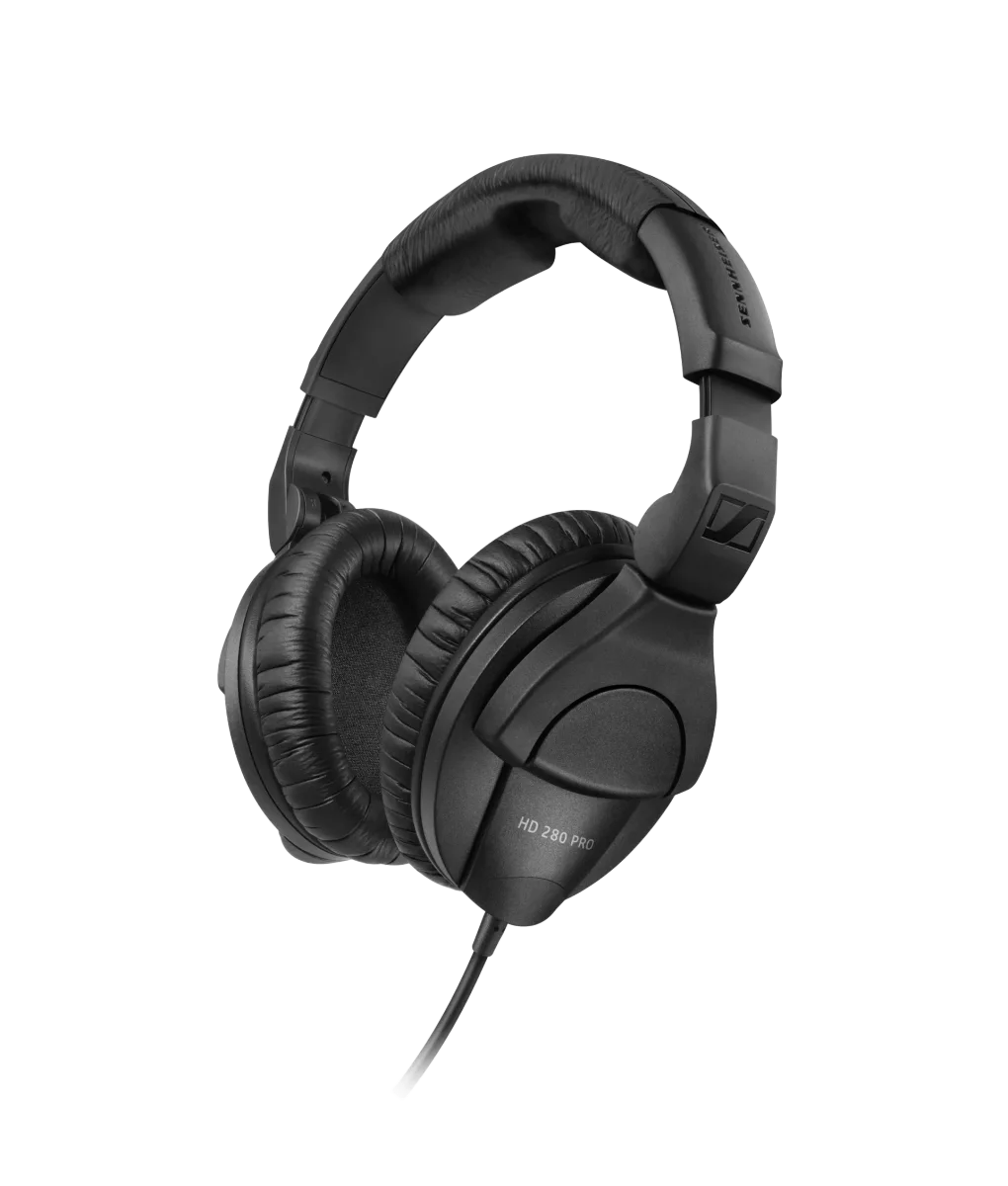
Image credit and product information: Sennheiser.
Key specs: Design: closed-back, around-ear; Impedance: 64 ohms; Cable: attached coil, 1.3-3m; Weight: 285g without cable.
At $89.99, the HD 280 Pro is the sensible budget starting point for a fixed recording station. The money saved against the M50x could stay in your budget for a microphone stand, an appropriate audio adapter or simply not buying anything else. It still supplies folding earcups and the quarter-inch adapter useful in a recording setup.
The compromise is its cable. It’s coiled, not straight, and attached to the headphone. A coil gathers spare length together, but stretches and pulls differently from a short straight lead beside a laptop. An attached cable can be a repair job; it doesn’t make the whole headphone disposable when a lead fails.
Skip the HD 280 Pro if switching quickly between short and long cables is central to your workflow. Check fit while you’re within the retailer’s return terms, too. Headband pressure and the seal around glasses are personal; specifications can’t establish all-session comfort on your head.
2. Sony MDR-7506 with Case
Buy Sony MDR-7506 with case on Amazon ->
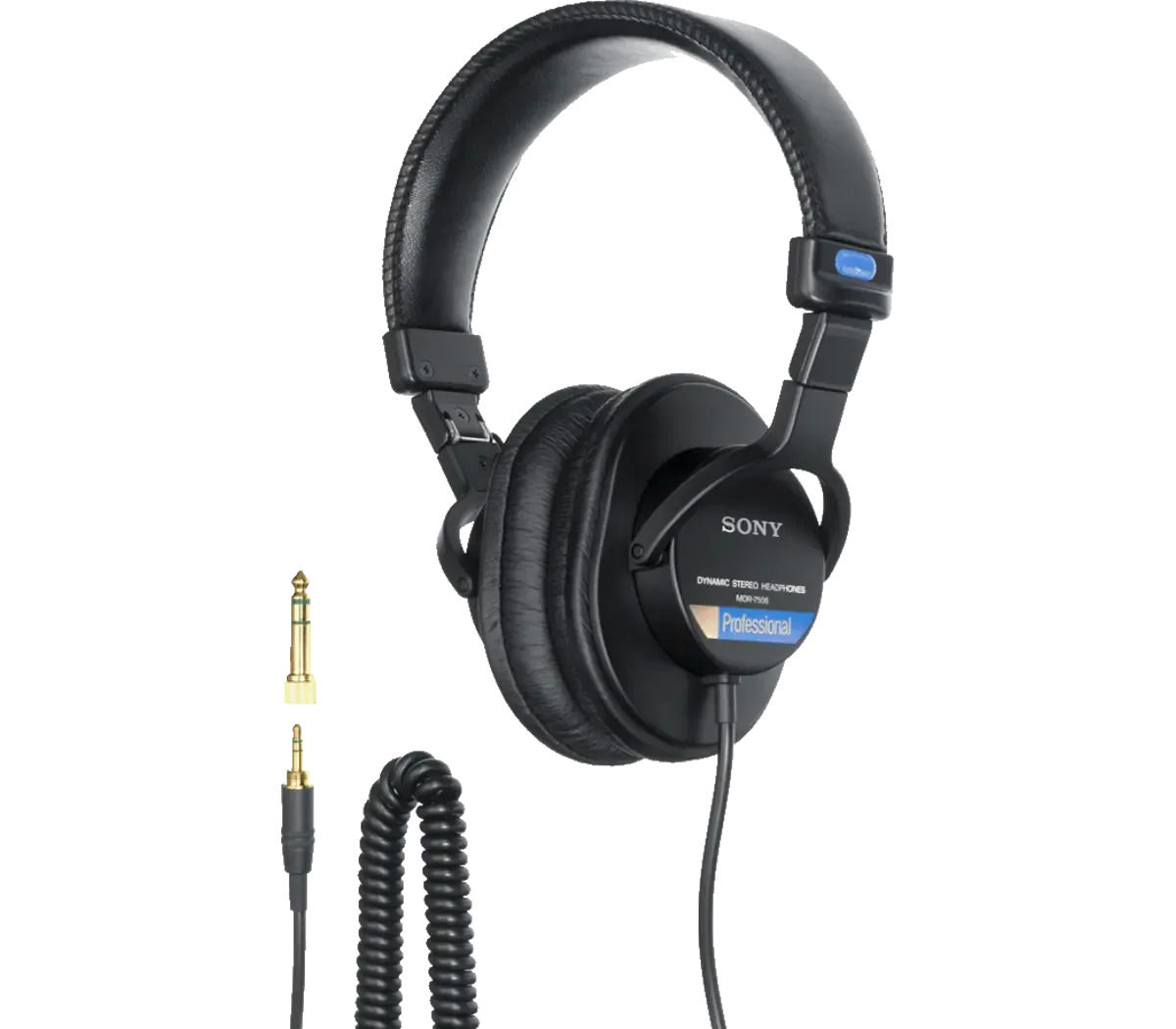
Image credit: Sony. Manufacturer image shows the headphones, not this seller bundle’s separate case.
Key specs: Driver: 40mm; Impedance: 63 ohms; Cable: attached 9.8ft lead; Construction: folding; Connection: 3.5mm with 6.3mm adapter.
The MDR-7506 suits a recording kit that gets packed away or taken out of the house. Folding construction helps alongside a portable recorder, while the long lead gives you room to move around a desk. The selected new offer is $129.99 including a case. That distinction matters when comparing it with standalone prices elsewhere.
Sony’s factory package includes a protective pouch and adapter; the additional case belongs to the selected bundle. Don’t interpret its presence as a newer headphone revision. If you already have a suitable equipment case, compare a verified standalone offer before paying for another one.
Skip this bundle if your main need is a short, detachable laptop cable. Its attached coiled lead is the meaningful compromise. Its professional history alone doesn’t establish that it’s the most accurate headphone here; the recommendation rests on the documented construction and how it fits a portable kit.
3. Audio-Technica ATH-M50x
Buy Audio-Technica ATH-M50x on Amazon ->
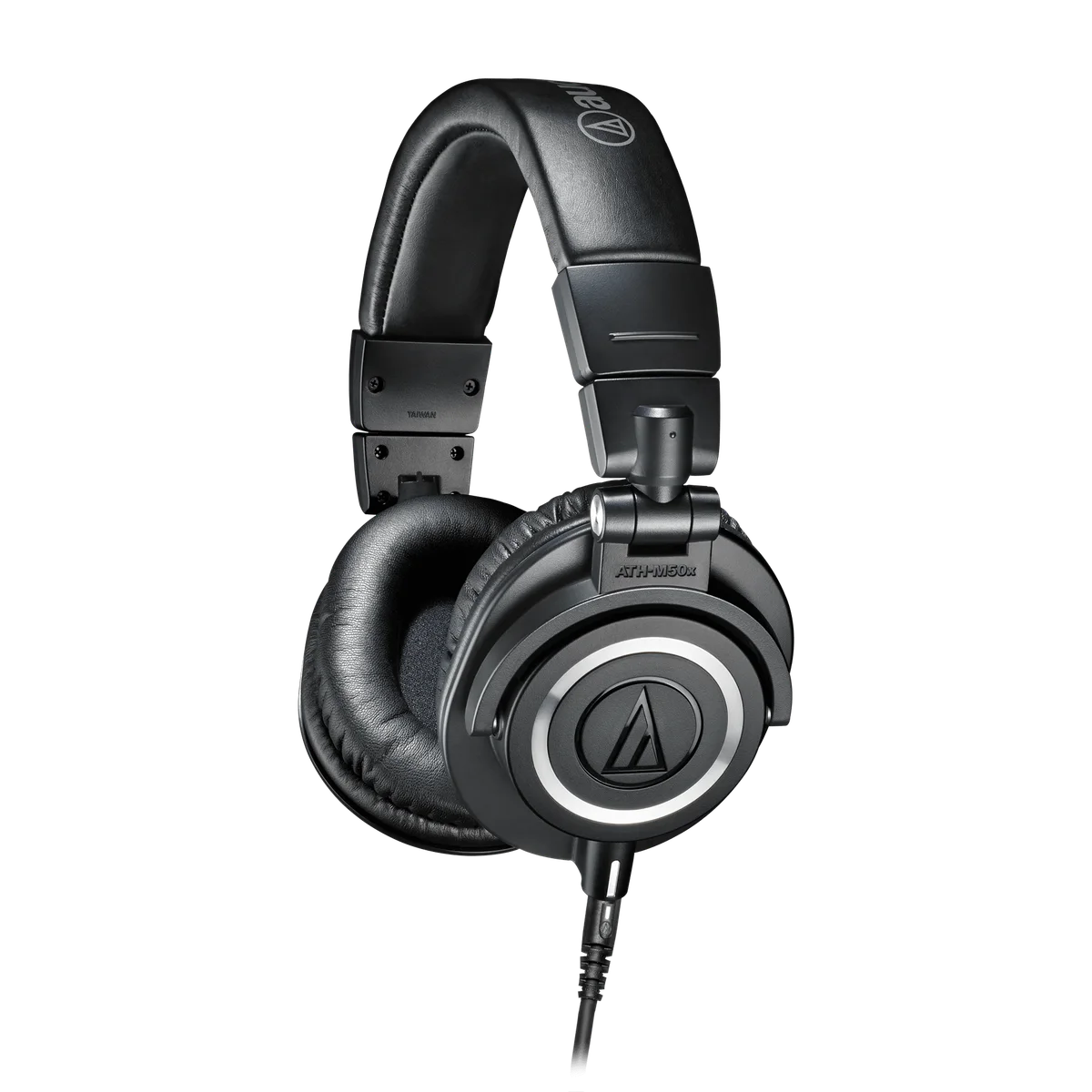
Image credit and specifications: Audio-Technica.
Key specs: Drivers: 45mm; Impedance: 38 ohms; Cables: three detachable leads included; Earcups: 90-degree swivel; Weight: 285g without cable and connector.
The $159.00 M50x is the straightforward all-round purchase here for moving between a laptop, an interface and a recorder. The included 1.2m straight lead keeps a desk setup manageable; the long straight and coiled alternatives cover more distant equipment. You don’t need a second cable purchase just to discover which arrangement suits the room.
Those leads are detachable, but replacement compatibility still matters. Buy a cable specified for the M50x rather than assuming any auxiliary lead will fit. The cups swivel for one-ear monitoring, useful when you need to hear the room briefly without taking the headphones completely off.
Skip the M50x if you only need an inexpensive pair permanently beside a mixer. Cable flexibility is a concrete reason for the premium over the HD 280 Pro; an unsupported promise of better mixes isn’t. This wired version won’t take calls as a headset or connect wirelessly.
4. AKG K371
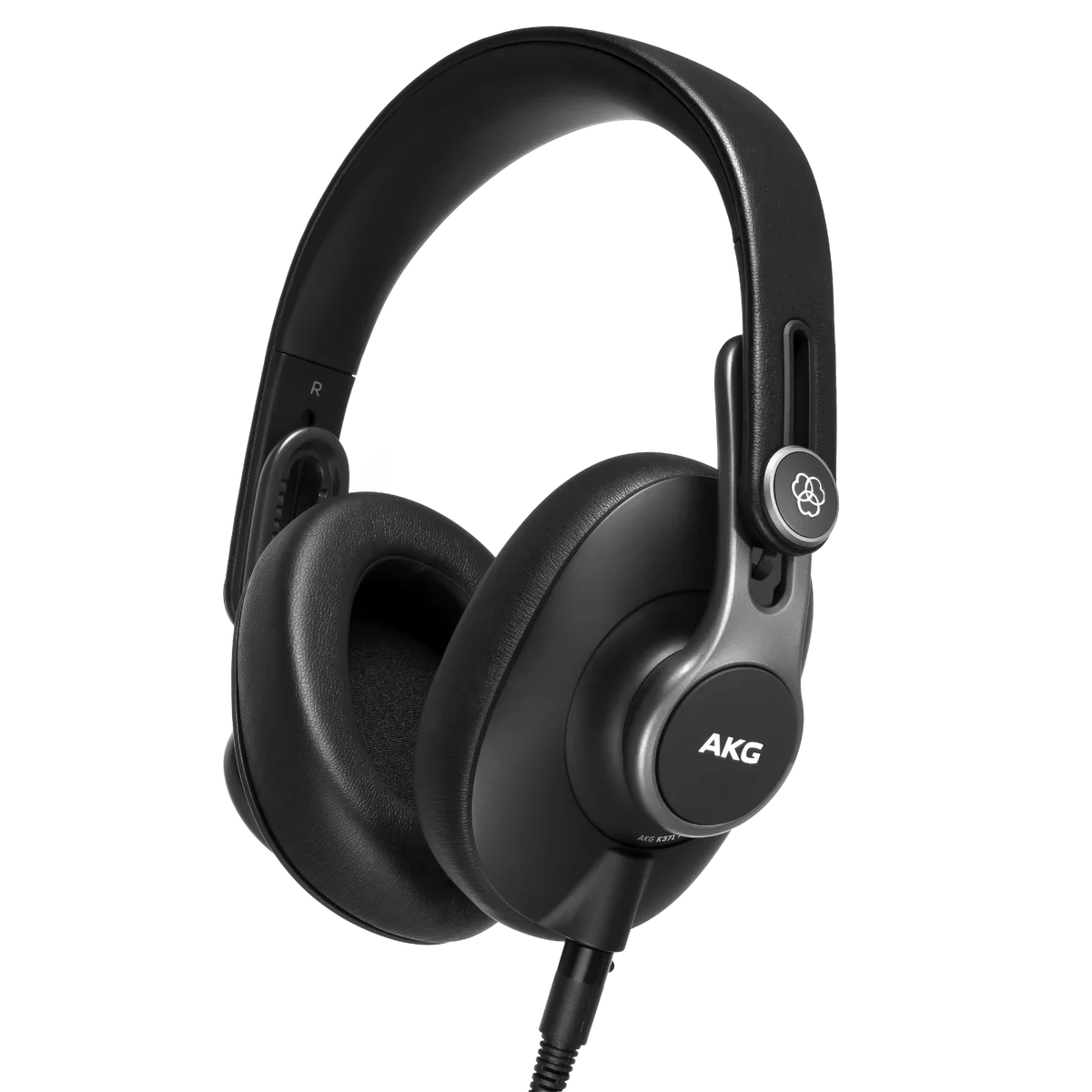
Image credit and specifications: AKG.
Key specs: Drivers: 50mm; Impedance: 32 ohms; Weight: 255g; Cables: two straight and one coiled detachable lead; Design: folding, closed-back oval earcups.
The $179.00 K371 is the alternative to try when you want detachable cables but the M50x shape doesn’t suit you. Oval cups, folding construction and its specified weight give you tangible differences to compare. As with Audio-Technica, the supplied short and long leads make changing equipment less awkward.
AKG describes its tuning through its Reference Response target. That’s a manufacturer design claim, not proof your finished mix will translate better to speakers than with every competitor. The useful question is whether it seals properly, stays comfortable and lets you make consistent decisions with recordings you know well.
Skip the K371 if the less expensive M50x already fits and supplies the cable arrangements you need. Also check that the listing says K371, not K371-BT: this wired model has no Bluetooth or battery. Replacement leads must match the exact model, not just the plug at the source end.
5. beyerdynamic DT 770 Pro 80 Ohm
Buy beyerdynamic DT 770 Pro 80 Ohm on Amazon ->
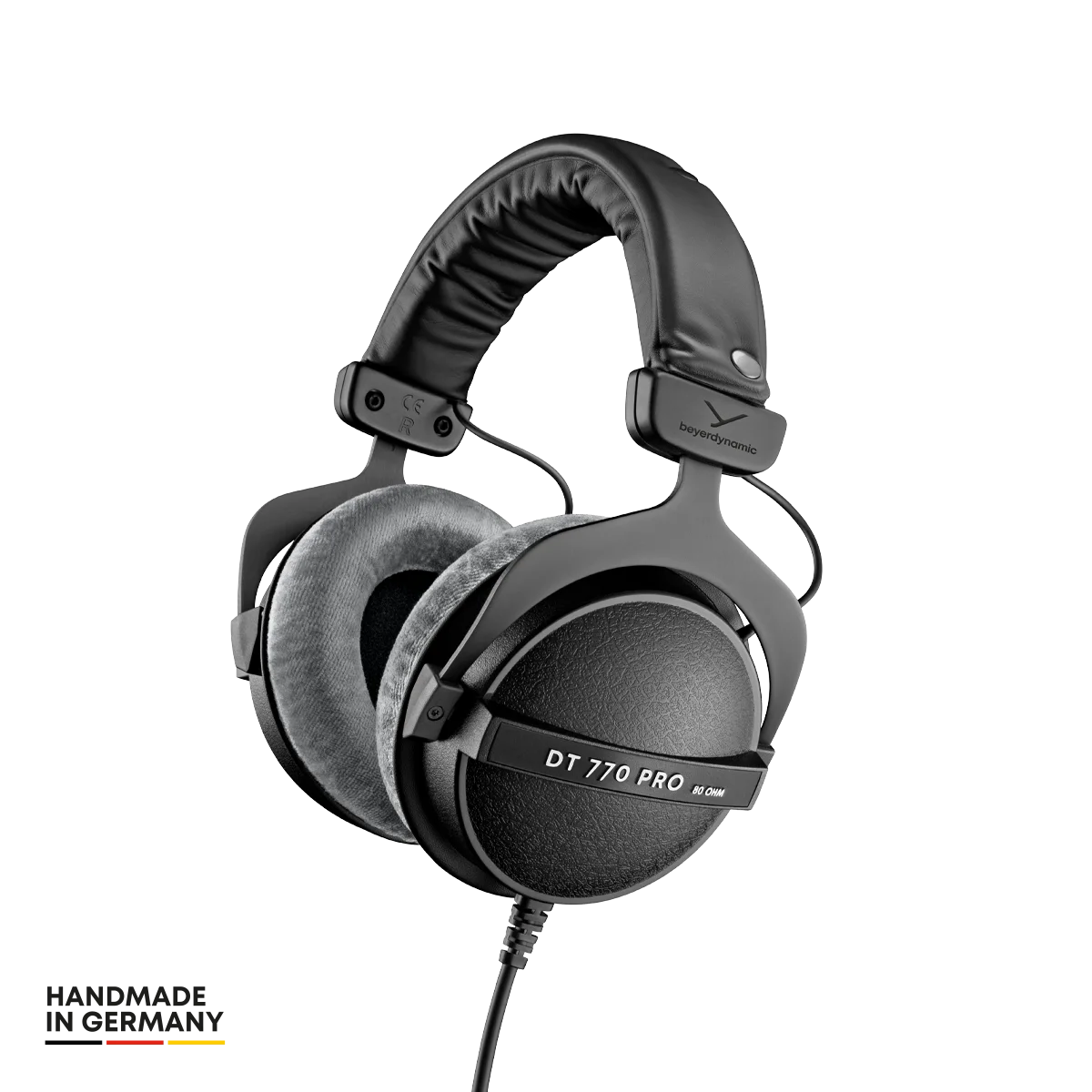
Image credit and specifications: beyerdynamic.
Key specs: Impedance: 80 ohms; Cable: attached 3m straight lead; Ear pads: velour; Connection: 3.5mm with 6.35mm adapter; Construction: closed-back, non-folding.
The $199.99 DT 770 Pro is the studio-stays-in-the-studio option. Velour pads and manufacturer-listed replacement pads and headband cushioning are practical reasons to consider it for ongoing use. They don’t establish that everyone will find it more comfortable, or that it blocks more sound than the other four.
Buy the exact variant deliberately. The standard 80-ohm model has a three-meter straight cable. The standard 250-ohm model’s coiled lead and the Pro X model’s detachable cable are different configurations. A small variant selection can change the feature you thought you were buying.
Skip this model if you want folding storage or a cable that unplugs at the earcup. Check the headphone output you will use, too. beyerdynamic’s source guidance distinguishes the variants’ intended uses; 80 ohms alone doesn’t certify adequate output from every laptop, dongle or interface.
Mixing: Learn the Reference Before Replacing It
A frequency range such as 5Hz-40kHz doesn’t describe how evenly a headphone reproduces the frequencies inside it. Nor can you rank amplifier requirements from impedance alone: sensitivity and the source’s output capability matter too. Don’t buy a separate amplifier before establishing that the existing output is insufficient or unsuitable.
For editing and mixing, start with familiar, well-produced recordings at a moderate, consistent level. Check your work on another playback system when possible. If you keep making the same bass or vocal-balance error, identify it across several mixes before assuming a more expensive pair will solve it. A known reference can be more useful than changing hardware every time a mix disappoints you.
Recording priorities differ: reliable monitoring, workable cable reach, a good seal and acceptable leakage into the microphone. Open-back headphones or speakers are alternatives for mixing in a quiet private room, not interchangeable replacements beside a live microphone. None of these five is hearing protection for a loud environment.
Who Should Buy What
- Lower-cost fixed recording station: HD 280 Pro, if an attached coiled cable suits the desk.
- A folding recorder kit with a case: MDR-7506 bundle, after checking whether you need the extra case.
- One pair across several setups: ATH-M50x, for the supplied cable choices.
- A different fit with similar cable flexibility: K371, particularly worth trying when cup shape is the issue.
- A dedicated studio pair with velour pads: DT 770 Pro 80-ohm, accepting its non-folding frame and attached straight lead.
FAQ
Do I need a headphone amplifier?
Not automatically. Check sensitivity and impedance against your source’s output specifications and usable listening level. A separate amp is relevant when the existing output is inadequate, noisy or lacks connections you need. There isn’t a universal rule that everything below 80 ohms works perfectly or everything at 250 ohms requires another purchase.
Can closed-back headphones stop a backing track leaking into a microphone?
They reduce leakage but can’t guarantee silence. Fit, listening volume, the microphone and its position all affect the result. Check a short take at the intended monitoring level before recording the performance. Don’t turn playback up to compete with a dangerously loud room.
Can I use these for gaming or video calls?
They play audio from a compatible analog headphone output, but none of these exact models contains a microphone. You’ll need a separate microphone for talking, and an adapter or interface if your device lacks analog output. They don’t become USB headsets through the included quarter-inch adapter.
Does a fixed cable mean the headphones can’t be repaired?
No. Fixed means you can’t unplug it at the earcup for a quick swap. Repair may still be possible through service or a qualified repairer. Detachable leads are more convenient to replace, but connectors must match the model. Pads and headband parts also aren’t universal accessories.
Bottom Line
The ATH-M50x is our starting point when one pair has to move between jobs. The HD 280 Pro is the lower-cost choice for a stationary setup. Spend more for a feature you’ll use, such as a different fit, detachable leads or a particular pad construction, not because a studio label promises to fix the mix.
This article contains affiliate links. PicksLab may earn a small commission at no extra cost to you. Our recommendations are based on the review method described in this article.